
Welcome:
Login
|
Sign Up
|
About CircleID
Follow:
|
|
|

 Today, I share a warning about serious changes to the Community Priority Evaluation (CPE) of the New gTLD Applicant Guidebook. They are not driven by public comment, but by a few voices within the SubPro Implementation Review Team - and they are very likely to lead to disastrous misappropriation of well-known community names, including those of Tribes, Indigenous Peoples and NGOs around the world. more
A recent study took an in-depth look at the scale and the risk of domain name typosquatting -- the practice of registering mis-spellings of popular domain names in an attempt to profit from typing mistakes. "Applying every possible one-character typo to the domain names of Facebook, Google, Twitter, Microsoft, Apple and Sophos," Paul Ducklin, Sophos' Asia Pacific head of technology collected HTTP data and browser screenshots from 1502 web sites and 14,495 URLs. In this report, Ducklin analyses the data revealing unexpected results within the typosquatting ecosystem. more
 The great promise of the new gTLD programme is not that it will spawn dozens of .COM clones, but rather that it will lead to the creation of a global constellation of unique names embraced by specific interest groups. As an ICANN community, our challenge now is to ensure that the policy framework we've created to manage new gTLDs advances that vision by not penalising the very sorts of domains that the programme was designed to encourage. more
 In Ripley Scott's classic 1982 science fiction film Blade Runner, replicant Roy Batty (portrayed by Rutger Hauer) delivers this soliloquy... "I've...seen things you people wouldn't believe... Attack ships on fire off the shoulder of Orion. I watched C-beams glitter in the dark near the Tannhäuser Gate. All those... moments... will be lost in time, like (cough) tears... in... rain. Time... to die." more
What's at the heart of cybersquatting may also be at the heart of free speech on the Internet: the diversion of Internet users looking for plaintiff's web site to defendant's web site. Cybersquatters register domain names to accomplish this, while meta-infringers (as we will call them) use HTML code and search engine optimization techniques. Meta-infringers do this by creating keyword density by using competitor's trademarks and permutations thereof in their website in order to rank higher in the search engine results when someone searches on the competitor's trademarks. more
 My book, "The Current State of Domain Name Regulation: Domain Names as Second Class Citizens in a Mark-dominated World" is now available by Routledge. The following is an overview of the book. more
 The World Intellectual Property Organization (WIPO) asserted on Monday that new gTLDs from ICANN would unleash a global crime wave. This dire warning was bolstered by an astonishing statistic: a whopping eight per cent (8%) increase in UDRP complaints from 2007 to 2008! But WIPO's press release tells only a very little of the truth. Astonishingly, the UDRP system actually works pretty well... more
 The recent ICANN meeting in Vancouver touched upon many issues important to ordinary Internet users: privacy in domain name registration; the cost and terms of .com domain names; internationalized domains; introduction of new domain suffixes. But there were few "ordinary Internet users" at the meeting. Few people can roam the globe to keep up with ICANN's travels, and not many more participate in online forums. more
 OARC held a 2-day meeting in February, with presentations on various DNS topics. Here are some observations I picked up from the presentations in that meeting... In a world where every DNS name is DNSSEC-signed, and every DNS client validates all received DNS responses, we wouldn't necessarily have the problem of DNS spoofing. Even if we concede that universal use of DNSSEC is a long time off ... more
 I wrote a guest column for ZDNet last month on the importance of IPV6. I fear that the Internet has been devolving into a recreation of the old smart networks with a lot of perverse complexity in the infrastructure. The latest calls for protection from all that bad stuff only adds to my concern since the problems attributed to the "Internet" will encourage people to seek more meddling. Unfettered connectivity has been a necessary precondition for allowing innovation to thrive on the Internet. It worked because the same openness allowed those at the edges to protect themselves against the errors whether malicious or just problematic. In fact, the so-called Internet revolution was triggered by the key concept of the browser -- treating other systems with suspicion but leaving it to the end points to decide how much to trust each other. more
 Expect a charm offensive as Comcast and scores of sponsored researchers explain how acquiring Time Warner Cable will promote competition and enhance consumer welfare. You might not hear too much about two traditional concerns remedied by actual facilities-based competition: incentives to innovate and reduce prices. Comcast will frame its acquisition as necessary to achieve even greater scale to compete with other sources of video content and maybe to compete with the limited other sources of broadband access. more
 Well... Maybe not the world, but the Internet it seems. According to a Pastebin letter, Anonymous announced they will black-out Internet on 31st of March. They even explained how to do it by attacking the DNS Root Servers on Internet using a reflected amplification attack. If this is successful, the root DNS servers will become unresponsive and cannot handle any other requests... more
 There was one obvious take-away from this week's ICANN meetings in Toronto, and for once it was less about policy and more about geography. Simply put, Africa is really - finally - coming together at ICANN, with a new energy, new unity and lots of new participation from African participants. And from top to bottom, the ICANN community seems to be taking notice. more
 Forbes just published this article that's being shared all over my facebook friends feed. I left a comment on the article that I've copied and pasted here, as it is just about long enough to qualify as a CircleID post by itself... The problem is that peering isn't always settlement free -- and even if it is, if and only if there's an equitable amount of traffic exchanged between two ISPs. And then there's transit, where you pay another network to carry your packets for you. more
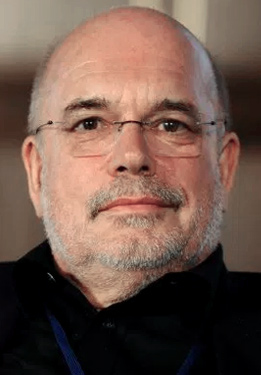 On February 8, 1996, John Perry Barlow published his "Declaration of Independence in Cyberspace" in Davos. Inspired by the "Digital Revolution" and the "Dot-Com-Boom", he predicted a new "Home of Mind," a cyber world without governments. "Governments of the Industrial World", he wrote, "you weary giants of flesh and steel. I come from cyberspace, the new home of Mind. On behalf of the future, I ask you of the past to leave us alone. You are not welcome among us. You have no sovereignty where we gather." more
A World-Renowned Source for Internet Developments. Serving Since 2002.