
Welcome:
Login
|
Sign Up
|
About CircleID
Follow:
|
|
|

 Whenever you register a domain name, your contact details are published in a publicly visible database called "Whois", where your contact details are instantly harvested by spambots and marketers who proceed to email and postal mail you marketing offers, deceptive "domain slamming" attempts, ads for dubious products, and perhaps even telemarketing calls. Nobody likes that, so over the years people started resorting to various tactics to protect themselves from the deluge of crap that inevitably comes with simply registering a domain name... more
 The fallout from the failure of RegisterFly has been largely addressed as an issue of regulation and enforcement. ...ICANN has not historically enforced the escrow obligation, and in any case, if a company has failed, who exactly is going to take responsibility for updating the escrowed data? It seems to me that the problems that have arisen as a result of RegisterFly's collapse have more to do with the design of the "shared registry system" for the .COM and .NET TLDs than they do with ICANN's failure to enforce the RAA. more
 It's easy to look at Amazon SES and sigh. Thousands of low-end customers sending mail from a shared IP pool? Amazon already knows that trick never works! Just one spammer will ruin the reputation of those IP addresses, resulting in ongoing delivery problems for everyone who uses the service. It is possible that Amazon can build the systems and human processes to keep spammers out; certainly sounds like they want to. more
 Want to read a wide range of views on how to strengthen the security and privacy of the Internet? Interested to hear how some of the leaders of the open standards world think we can make the Internet more secure? As I wrote about previously here on CircleID, the W3C and the Internet Architecture Board (IAB) are jointly sponsoring a workshop on "Strengthening The Internet" (STRINT) on February 28 and March 1 in London just prior to the IETF 89 meeting happening all next week. more
 In his January 12 SpaceX update, Elon Musk said the biggest goal for Starlink from a technical standpoint is to get the mean latency below 20 ms. He expanded by saying that given the speed of light, 8 ms is the absolute minimum latency for a satellite at 550 km. He believes they can optimize terrestrial and inter-satellite links, and minimize queueing delays and dropped packets, to recude the the rest of the time to below 10 ms. more
In a joint statement to the European Commission's new tech appointee, Henna Virkkunen, a coalition of internet advocacy groups has firmly opposed recent proposals aimed at imposing network fees on content providers. more
 There was one unpleasant message from the 2025 Munich Security Conference (MSC), which will have probably far reaching consequences for the governance of the digital space: Cyberspace will be governed by the rules of geo-political conflicts. And it is a battlefield in the 21st century wars. Both in the "Bayerischer Hof" and in the "IHK Munich", where the 11th edition of the Munich Cybersecurity Conference (MCSC) took place, controversial debates circled around the question of how civilian and military use of digital services will interplay in the years to come. more
 In the efforts to promote the public interest over that of monied interests in Internet Governance few issues are clear cut. One issue that has recently been discussed is that of requiring a "needs assessment" when transferring IP addresss blocks from one organisation to another (in the same or different RIR regions) or indeed when requesting IP resources from your friendly RIR. more
 I recently came across an interesting piece about the use of IP addresses in the Tesla model S. The part that caught my attention and led to this post is that the car uses the private IPv4 address subnet 192.168.90.0/24 to address different nodes e.g. the centre console is 192.168.90.100 and the dashboard/navigation screen is 192.168.90.101. Put your geek hat on for a moment as you ponder that! more
The following is the easyDNS response to ICANN's public comment period on GNSO Privacy & Proxy Services Accreditation Issues Working Group Initial Report. The public comment period is open until July 7, 2015. We strongly urge you to make your voice known by signing the petition over at Save Domain Privacy. I submit these comments as a CEO of an ICANN accredited registrar, a former director to CIRA and a lifelong anti spam contributor with an unblemished record of running a managed DNS provider that maintains zero tolerance for net abuse or cybercrime... more
Earlier this year we requested your questions on one of ICANN's most heated discussions -- issues involving top-level domains (TLDs) -- which we passed on to Vint Cerf, Google's VP and Chief Internet Evangelist and chairman of the board of ICANN. Despite an understandably heavy schedule, Vint Cerf has taken the time to personally respond to more questions than we had originally anticipated. So with our special thanks, here are his responses. more
In a groundbreaking development, scientists from Aston University, in collaboration with the National Institute of Information and Communications Technology in Japan and Nokia Bell Labs in the US, have set a new world record in internet speed. more
In December 2003, the testing phase of Multilingual domains also known as Internationalized Domain Names (IDN), went live with the addition of over 350,000 multilingual domains to the .com and .net registries. As of 1st January 2004, the .com registry contained 300,409 IDN's, whereas the .net registry had 79,630 IDN's, representing around 1.25% of the total .com and .net domains. WebHosting.Info has analyzed these 380,039 IDN domains that are now live, and provided a detailed insight on trends and patterns across these domains. more
 Shortly after the National Telecommunications and Information Administration (NTIA)'s recent announcement allowing Verisign to pursue increased .com registry fees, Verisign published a blog post questioning the business practices of registrars and domain name investors. The ICA, on behalf of its registrar and domain name investor members, had previously spoken out against a .com fee increase, as did others in the domain industry. more
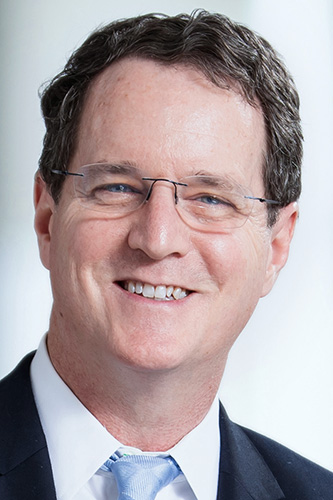 Network operators rely on guidance from IP address experts because not all IP addresses used on the Internet are the same. The "reputation" of email senders is especially important because some are malicious users of the system. But identifying "senders" based on their email addresses or the individual IP address of a user presents issues that are unnecessarily complex. more
A World-Renowned Source for Internet Developments. Serving Since 2002.