
Welcome:
Login
|
Sign Up
|
About CircleID
Follow:
|
|
|

 Trump has a dilemma. He has to take some executive action that will allow him to ridicule President Obama and show that he is punishing Cuba for its human rights violations and the confiscation of businesses and property after the revolution, but not harm US telephone companies, hotel chains, airlines and cruise lines. Trump is expected to announce his Cuba policy next Friday in Miami. There can be little doubt that he will reverse some of President Obama's executive orders... more
 Now that the search has officially commenced, I thought it might be useful to make some public statements as to what I would like to see from the next ICANN CEO. My comments are driven by what I see as the deficiencies over the last number of years and, most importantly, by a deep desire to see the ICANN experiment in global governance succeed. The Internet is the greatest agent for positive change the world has ever seen and a healthy ICANN strengthens its ability to foster positive change. more
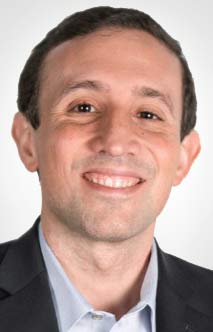 In my recent CircleID post, DNS, Domain Names, and Certificates: The Missing Links in Most Cybersecurity Risk Postures, I highlighted the importance of applying multiple layers of defense to secure these business-critical assets. Last Friday, Brian Krebs, the world-renowned cybersecurity journalist, reiterated the criticality of domain name security because the domain name "e-hawk.net" was stolen from the rightful owner using social engineering tactics targeting its domain name registrar. more
 The largest traditional cable providers collectively lost over 1.3 million customers in the fourth quarter of 2020 -- an overall loss of 1.7% of customers. To put the quarter's loss into perspective, the big cable providers lost 14,158 cable customers per day throughout the quarter. The numbers below come from Leichtman Research Group, which compiles these numbers from reports made to investors, except for Cox, which is estimated. more
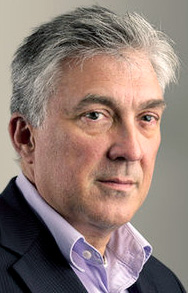 On Wednesday 16 March the Serious Organised Crime Agency organised a meeting in London with the RIPE NCC. For the second time law enforcers from the whole world met with the RIPE NCC and RIPE community representatives to discuss cooperation. RIPE NCC staged several very interesting presentations that showed the LEAs the importance of the work done within RIPE and ARIN, the information RIPE NCC has and the relevance of all this to LEAs. Also issues were addressed that can potentially be harmful to future investigations. more
EU holds an eight-hour-long hearing taking an extensive look at whether US surveillance practices break European data protection laws. more
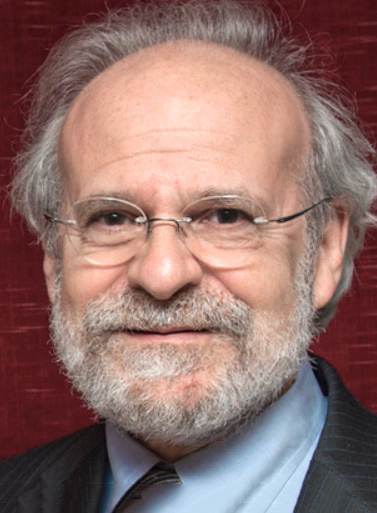 The term "last mile" highlights the fact that we are the consumers at the end of a broadband "pipe". Saying "first mile" is a little better but the Internet is not a pipe to or from somewhere else. It's about what we can do locally and then what we can do when we interconnect with other neighborhoods. It's better to describe our neighborhood as the first square mile. Telecom is about selling us services; the Internet is about what we can do ourselves locally and then interconnecting with others everywhere. In writing the First Square Mile - Our Neighborhood essay which I just posted I came to better understand the fundamental difference between the world of telecom which is about giving you choices and the Internet which provides opportunity to discover what we can't anticipate... more
There has been an interesting public fight going on at the FCC as Viasat has been telling the FCC that Elon Musk's Starlink should not be eligible for funding from the Rural Digital Opportunity Fund (RDOF). At stake is the $886 million that Starlink won in December's RDOF auction that is still under review at the FCC. Viasat had originally filed comments at the FCC stating that the company did not believe that Starlink could fulfill the RDOF requirements in some of the grant award areas. more
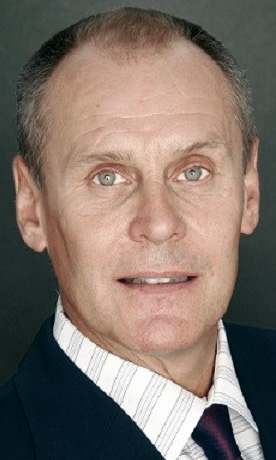 In early November 2013, prior to ICANN's Buenos Aires meeting, I published an article at this forum, Policy Advisory Boards – A Cornerstone PICS (Public Interest Commitment Specification), that extoled the advantages of adopting a Policy Advisory Board (PAB) model as a practical, effective, and least burdensome means of effectively implementing the request of ICANN's Governmental Advisory Committee (GAC) for consumer and competitive safeguards at sensitive new gTLD "strings" - especially those that are related to regulated industries and professions. It is deeply gratifying that the article has received nearly 9,000 views since first being posted and inspired considerable discussion. more
 Last week, I visited Budapest to deliver a speech at the ICANN Studienkreis, an annual conference where experts study and address some current issues relating to Internet governance. I discussed how the Internet is on a slippery slope. Starting with the legitimate concern over how to deal with cybersquatters, we have moved to an unreasonable focus on legal control of Internet content and the domain name system. more
The German digital association, Bitkom, recently announced that the cost of IT equipment theft, data breaches, digital and industrial espionage, and sabotage is expected to reach a staggering 206 billion euros ($224 billion) in 2023. more
 According to UN Secretary-General Antonio Guterres, the forthcoming UN World Summit on the Future", scheduled for September 2024, should adopt a "Global Digital Compact" (GDC).1 The GDC is part of the so-called "UN Common Agenda." The compact is expected to "outline shared principles for an open, free and secure digital future for all" and to cover issues as digital connectivity, avoiding Internet fragmentation, providing people with options as to how their data is used... more
 When Barack Obama succeeded George W Bush and became America's 44th president, it seemed he could do no wrong. But this was arguably more a consequence of the perceived inadequacies of his predecessor than a realistic reflection on his own abilities. A fact highlighted by Obama being awarded the Nobel peace prize a mere nine months after taking office, before he'd had any real chance of having an impact on America or the world. When Fadi Chehadé was formally introduced as ICANN's next CEO, at the organisation's 44th international meeting in Prague last June, there was an undeniable Obama effect... more
 As a member of ICANN's Business Constituency I have heard first-hand the perfectly appropriate criticisms from trademark holders of ICANN's roll-out of new generic Top-Level Domains (gTLDs). But while it may be OK for branded companies to wish they didn't have to deal with the matter, the dust that has been kicked up has obscured real value in the program. more
 We're in an interregnum where society has paused, and there's no telling how things may turn. In such times of crisis, we are the explorer; exploring the uncharted waters of change, where dangers and opportunities lie. How the pandemic caused this greater societal change may not be something that an individual can alter, we may, however, take the helm and navigate. more
A World-Renowned Source for Internet Developments. Serving Since 2002.