
Welcome:
Login
|
Sign Up
|
About CircleID
Follow:
|
|
|

 For three years, I've been a member of ICANN's "Interim" At-Large Advisory Committee, ALAC. At this Vancouver meeting, for the first time, the ICANN Board met with us, and Bret captured it on mp3 for podcast. ALAC criticized ICANN's proposed settlement with VeriSign, and then spoke about the problems with the current structure for at-large participation. more
 In an age where the world has gone global in many forms and guises, the political attention is more and more focussed on national, populist issues, that arise from fear for the unknown. I can't deny it: the future undoubtedly contains many uncertainties. This usually comes with a general public that's afraid and in fear of things they cannot oversee. Thus it is easily aroused by a populist leader who feeds on this fear and throws flammable material on the already smouldering fire. In a time where leadership is called for, it seems lacking. The Internet governance discussion demands visionary leadership on a cross border level and it needs it soon. more
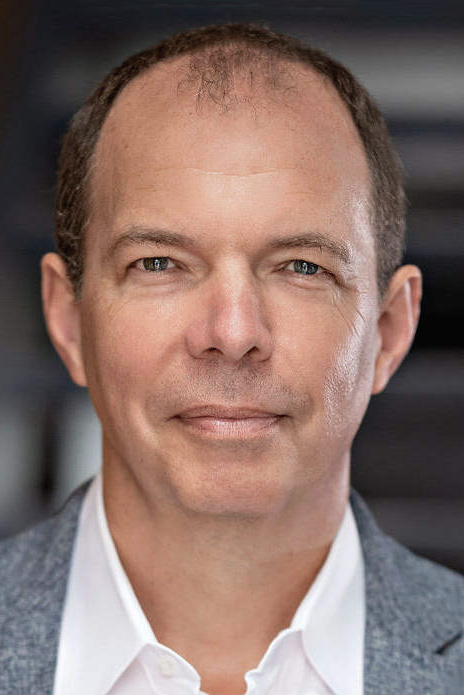 If you follow the Internet governance world like I do, you've no doubt had time to ponder the news of former ICANN Board Chair Peter Dengate Thrush's appointment as Executive Chairman of Top Level Domain Holdings Limited (TLDH). This was a seemingly fast jump from the body that coordinates the Internet (whose most recent milestone was to approve the creation of new gTLDs) to one of the key companies that stands to actively benefit from this burgeoning part of the domain name industry. Further, he's taken up a position that, according to reports, will allow him to benefit substantially as well. more
 As a reader of this article, you are probably familiar with the DNS cache poisoning techniques discovered a few years ago. And you have most likely heard that DNSSEC is the long term cure. But you might not know exactly what challenges are involved with DNSSEC and what experience the early adopters have gathered and documented. Perhaps you waited with our own rollout until you could gather more documentation over the operational experience when rolling out DNSSEC. This article summarizes authors' experiences and learnings from implementing the technology in production environments as well as discusses associated operational issues. more
 One of the other web sites I subscribe to is Stratfor. It's a global intelligence website and doesn't really have much to do with spam. But I like politics so I read it. They have some articles which you can get for free, but the better stuff you have to pay for. About two weeks ago, they ran a three-part series on Cyberwarfare. The first article was the title of this post, which you can access here (requires registration). In the article they described different types of cybercriminals and not-so-criminals which they referred to under the umbrella as "hackers." more
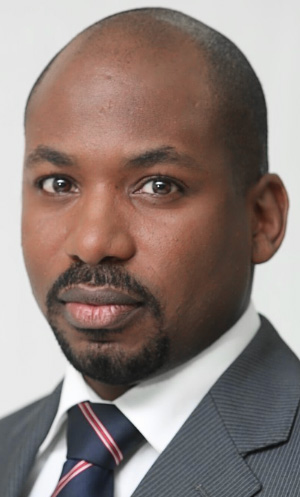 Regenie Fräser, the former Secretary General of a regional trade association, has been selected to serve a one-year term on the board of trustees of the American Registry of Internet Numbers (ARIN). Fraser's appointment makes her the first person from the Caribbean and the first non-white person to serve on the ARIN board. ARIN is one of five registries worldwide that coordinate Internet number resources. more
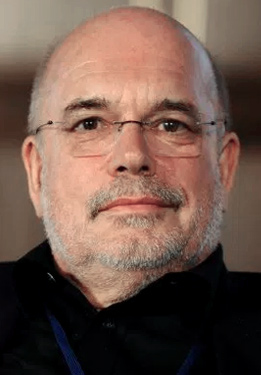 At June 30, 2015 the Inaugural Meeting of the Coordination Council of the NetMundial Initiative (NMI.CC) elected a "Quintett" to guide its activities through the global Internet Governance Ecosystem. Alibaba's CEO Jack Ma from China, ICANN's President Fadi Chehade, Brazilian's Minister Virgilio Almeida and two woman: Eileen Donahou from Human Rights Watch (HRW)) and Marilia Maciel from the Center of Technology and Society (CTS) in Rio de Janeiro are sharing now the helm to bring more steam to this new innovative multistakeholder platform. more
 Search marketers and SEO mavens are starting to pay attention to top-level domains (TLDs) now that ICANN has announced a starting date. Many of them are dubious about the benefits of TLDs to search, but they are missing out on why search will benefit from new TLDs - and vice-versa. A recent article on SEO.com looked at the value of new top-level domains for search. One of the reasons for his skepticism comes from a common but completely erroneous notion that there's some sort of order to how top-level domains work today... more
 VeriSign makes a great deal of money from the .COM and .NET registries. Can we tell how much they make, and how much that might change if the CFIT lawsuit succeeds? It's not hard to make some estimates from public information. The largest gTLD registry that VeriSign doesn't run is .ORG, which was transferred a few years ago to the Public Internet Registry (PIR) which pays Afilias to run the registry, and uses whatever is left over to support the Internet Society (ISOC)... more
 I was looking back at industry reporting a year ago after the impact of the pandemic first hit our broadband networks. Almost every big ISP issued press releases talking about how well it had weathered the pandemic and bragged about the resiliency of its networks. It turns out that these ISP press releases largely missed the point. They are right that their networks didn't crash, but once we understood the nature of the changes in broadband traffic due to the pandemic, that wasn't a big surprise. more
 A great deal of discussion is taking place about topics such as the digital economy, sharing economy and networked economy. Obviously these are concepts rather than being well-defined, but they are being used by the various players in the market to argue for or against certain developments. For example, in some of the broadband debates around the world, the digital economy is the key reason why national broadband infrastructure gets developed. more
 I have written a short paper on the topic of Internet Governance. Since it includes a number of resources, it would be easier for me to just point to a link with the document itself. Below are some selected excerpts from the document. "Several myths have been spreading around the World Summit on the Information Society (WSIS), but especially after the first Internet Governance Forum (IGF): The critical Internet resources (CIR) consist only of the IP addresses and the domain name system... There are only 13 root servers..." more
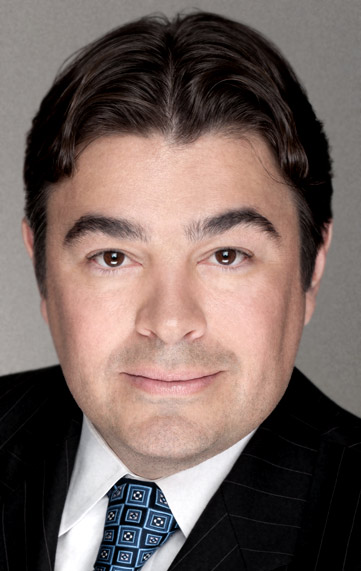 Last fall, I wrote about ICANN's failed effort to achieve its goal of preserving the Whois domain name registration directory to the fullest extent possible. I predicted that if the policy effort failed, governments would take up the legislative pen in order to fulfill the long-ignored needs of those combating domain name system harms. That forecast has now come true through significant regulatory actions in the United States and the European Union in the form of a proposed directive from the European Commission (EC) and instruction from the US Congress to the National Telecommunications and Information Administration (NTIA). more
 Minds + Machines was the first "new gTLD portfolio applicant" I spotted early in 2008, when .PARIS started being mentioned. Then came a few other projects like .HORSE and later .VODKA. Being French, my vision of good new gTLD suffixes may be slightly different to those native English speakers. Therefore, I favour some TLDs such as .SURF and .ART over some clearly English terms others such as .HORSE. more
 In Tony Li's article on path MTU discovery we see this text: "The next attempt to solve the MTU problem has been Packetization Layer Path MTU Discovery (PLPMTUD). Rather than depending on ICMP messaging, in this approach, the transport layer depends on packet loss to determine that the packet was too big for the network. Heuristics are used to differentiate between MTU problems and congestion. Obviously, this technique is only practical for protocols where the source can determine that there has been packet loss. Unidirectional, unacknowledged transfers, typically using UDP, would not be able to use this mechanism. To date, PLPMTUD hasn't demonstrated a significant improvement in the situation." Tony's article is (as usual) quite readable and useful, but my specific concern here is DNS... more
A World-Renowned Source for Internet Developments. Serving Since 2002.