Welcome:
Login
|
Sign Up
|
About CircleID
Follow:
|
|
|

New TLDs |
Sponsored by |

|


 I participated in the French RINDD last week in Paris: RINDD stands for "Rencontres Internationales des Noms de Domaine". The translation would be "The International Domain Name Conference". This event is organized once a year by SafeBrands, a French Registrar. Many participants were there: the ICANN, Law Firms, Donuts, other new gTLD applicants, back-end Registries and many experts. more
 If you're considering rebranding under a new gTLD, go with a comprehensive big bang. A recent study by professors Dale Miller, Bill Merrilees, and Raisa Yakimova ("Corporate Rebranding: An Integrative Review of Major Enablers and Barriers to the Rebranding Process") finds that success comes when senior management makes an unweaving commitment based on proactive analyses of the entire value-chain, with buy-in and input from employees and suppliers. more
New York City is in the midst of a two part Landrush for its .nyc domain names. First is a 60 day application period (August 4 – October 3) during which anyone with nexus -- basically city residents -- can purchase an available .nyc domain name... It doesn't even matter if a name has a NYS Trademark or d/b/a registration, those names too are fair game... There are significant problems with this process. more
As part of a plan to unify Australian basketball digital front, Basketball Australia is moving its official website to a new TLD-based domain name at www.australia.basketball. more
 On Monday, June 21, ICANN convenes in Brussels, hosting its "Welcome Ceremony" for attendees. In advance of the session, the agenda for the Board meeting on Friday, June 25 has been released. As is the fashion, it lists significant issues without being too specific or tipping the Board's hand. It also allows for matters that arise organically during the week of the meeting to (possibly) be heard. more
 Why in the world would any company sign-up for a "New gTLD Application Monitoring Service" when ICANN intends to publicly post all applications on May 1st? Domain Name Watching and Trademark Watching Services make perfect sense when new registrations and applications are being submitted and granted on a daily basis. I think that we can all easily agree that trying to understand new domain name and trademark registrations without an automated service would be nearly impossible. more
 In my previous article I showed that ICANN expects to recover a lot of money from the first round of applications for new generic Top-Level Domains (gTLDs) -- $92.5 million, to be exact -- and that even that dramatic figure is probably substantially underestimated. For that reason, I argued that ICANN probably will recoup a windfall from the first round of gTLD applications and pointed out that ICANN's promise to consult with the Internet community before spending such a windfall is unsatisfactory because it has failed to say beforehand what surplus revenues might be spent for. more
Kevin Murphy reporting in DomainIncite.com: "Almost half of trademark-conscious companies are considering a '.brand' top-level domain, according to a survey carried out by World Trademark Review magazine. The survey also found that there is much more interest in new TLDs among marketing folk than lawyers, which is perhaps not surprising. So far, only a few potential .brand applicants have been revealed..." more
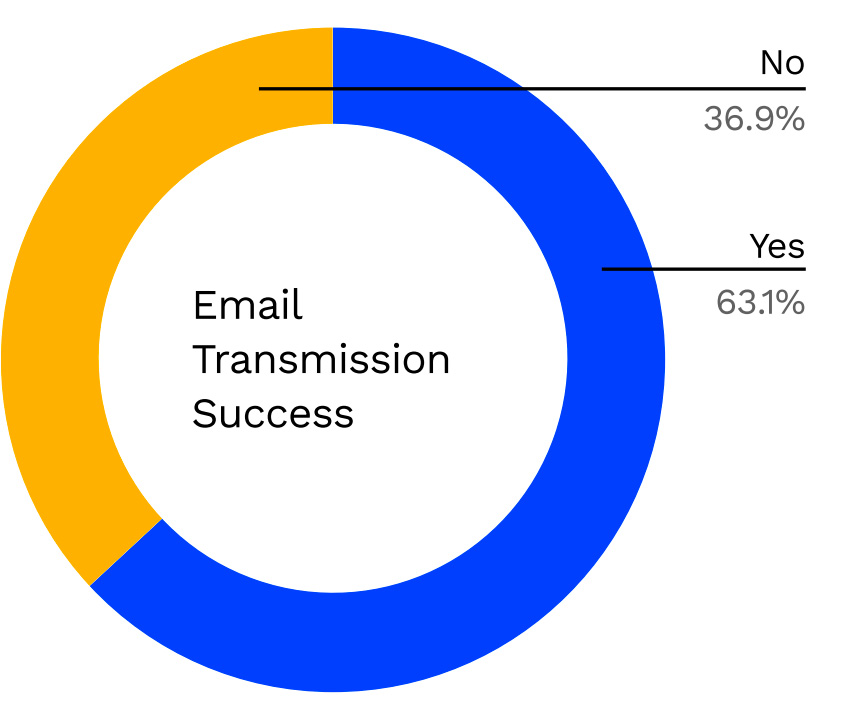
 2020 has been extremely eventful, so it follows that the domain industry has continued to experience perpetual change, progress and uncertainty in the last three months of the year. In our Q4 New gTLD Quarterly Report, MarkMonitor experts analyze topical registration activity, launch information, .brand growth and DNS abuse, and share a list of upcoming industry meetings for 2021. more
Afnic, the French association in charge of the .fr domain and several other Internet Top Level Domains, has published the 2024 edition of its annual analysis "The Global Domain Name Market". Here is a summary of the overarching trends and key figures. more
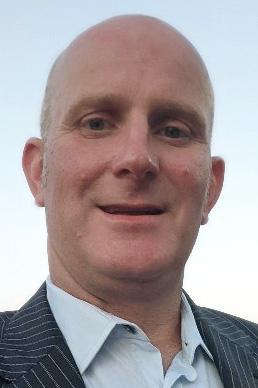 The impact of new generic Top-Level Domains on the price of existing gTLDs and ccTLDs is likely to be limited, Tim Schumacher, CEO of leading domain name marketplace Sedo, told the the Domain Pulse conference in Vienna, held on 17 and 18 February. "I don't think the new gTLDs will have a major impact on pricing of existing TLDs. If you start a company or a product, you will always need to have your 'dotcom' or respective ccTLD in the market you operate in," said Schumacher in an interview following the conference. more
 When ICANN implemented the Uniform Domain Name Dispute Resolution Policy (UDRP) in 1999, the number of registered domain names were in the low eight digits. Registered domain names passed the first million in 1997. Today, they are in the first third of nine digits, and continuing to grow. In its newly released publication gTLD Marketplace Health Index (Beta) (July 21, 2016) ICANN offers through a couple dozen metrics a picture of the multiple parts that corporately go into making a healthy marketplace. It's "Beta" because the Health Index is a work in progress. more
Google's highly anticipated new .APP top-level domain (TLD) is now in the final "General Availability" phase, and open to anyone for domain name registrations. more
GMO Registry, Inc, a Japanese domain name registry business, has won the rights to a single new top-level domain, .shop, for $41.5 million. more
In a landmark ruling, a U.S. federal court has agreed with the Internet Corporation for Assigned Names and Numbers (ICANN) that the country code Top-Level Domains (ccTLDs) are not property subject to attachment and thus overruled an attempt to seize Iran's, Syria's and North Korea's domains as part of a lawsuit against those countries' governments. more
A World-Renowned Source for Internet Developments. Serving Since 2002.