
Welcome:
Login
|
Sign Up
|
About CircleID
Follow:
|
|
|

Amid evolving privacy laws and rising cybersecurity threats, domain registration data disclosure remains a contentious issue. Beyond WHOIS: Filling the Gaps brings together experts to examine Project Jake's policy framework, aiming to balance privacy with legitimate access. Join industry leaders for insights on policy clarity, operational efficiency, and the future of domain name governance. more
 Crime, fraud, scams etc., they're all very bad things. They're also not going to go away anytime soon. As a domain name registrar and hosting provider we're constantly "at risk", as we sell a lot of services that are both cost-effective and also give criminals the tools they need to attack 3rd parties. Again, this isn't exactly news. We've always taken a very pro-active approach to dealing with criminal activity and network abuse... But recently I've been losing sleep. more
 Last time the ICANN faithful gathered in Sydney, there was a fair bit of unrest and some big unknowns. The Implementation Recommendation Taskforce (IRT) report on how Intellectual Property (IP) could be protected in the era of new Top-Level Domains (TLDs) stirred the pot as did, to a lesser extent, the issue of Registry-Registrar separation in new TLDs. Additionally, everyone had big questions on their minds - when the root would be signed (and DNSSEC fully implemented)... Four months later and five thousand miles almost due north, the netizens gathering at ICANN 36 in Seoul know the answers to some of those very important questions. more
 Until now, the criminals behind malware and phishing have had only 22 generic top-level domain names (TLDs) to abuse -- names like .com, .net or .org. But with hundreds of new TLDs entering the marketplace, e.g. .buzz, .email, and .shop, there are many more targets than ever... What can attackers do with domain names? more
 A dispute policy for the new '.bible' top-level domain name requires panelists who agree to hear cases to affirm that they "enthusiastically support the mission of American Bible Society" and that they "believe that the Bible is the Word of God which brings salvation through Christ." The DotBible Community Dispute Resolution Policy appears to be the first domain name dispute policy that requires panelists to take a religious oath - or, for that matter, an oath other than anything related to maintaining neutrality. more
 There is probably no worldwide community without at least one member located in the US. But does this qualify the closing of a community to only US based members and, by extension, to exclude all other eligible entities from around the world solely because of arbitrary geographical circumstances based upon company whims? more
 The .LY domain is Libya, and their government recently cancelled the registration of the short and snappy VB.LY, provoking great gnashing of teeth. If you direct your attention to the address bar above this page, you'll note that it's at JL.LY, equally short and snappy. The .LY registry started allowing two letter second-level domains last year, and there was a quiet land rush. Now they restrict those domains to people actually in Libya, but say they'll let us keep the ones we have. How concerned am I that they'll take my domain away, too? more
 The following is a proposal for an "Early Warning" system to resolve one of the remaining impasses between the ICANN Board and the ICANN Governmental Advisory Committee (GAC) as identified in the GAC Scorecard. Based upon phased array radar technology, this proposal is designed to incorporate multiple discrete evaluation phases into the new generic Top-Level Domain (gTLD) program to provide an integrated and comprehensive early warning system for the GAC in providing advice to the ICANN Board, potential applicants, and the broader Internet community. more
 I went through the exciting exercise of checking all March 2019 new gTLD reports to extract which domain name extension shows an interesting learning curve (or something strange happening). This is what I noticed for the 20 categories of TLDs... In the list of new gTLDs for Politics, the first new gTLD to have been delegated from the ICANN new gTLD program - .GURU (63,000) - lost 2,000 registrations since January 2018 (not 2019). more
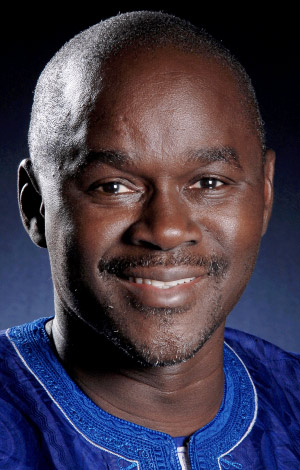 The announcement last month of a new approach by the Internet Corporation for Assigned Names and Numbers (ICANN) to Africa is welcome, and significant for a number of reasons. Africa must participate in ICANN's activities to help shape its policies, and benefit from the domain name industry (estimated at $2 billion in 2008), where it lags behind other regions, given the few African registrars, and that there are no generic top-level domain names (gTLDs) registries that are African. more
With lessons learnt from the first Round, what does a new applicant need to know to prepare for the coming Round? Which example should he follow to increase his chances of success? I have had the chance to read about new domain names sales figure expectations, prior to the launching of Round one of the ICANN new gTLD program. Comments that I read and feed-backs that I have today are: "our expectations are the one we wrote on the paper and we are happy with them". more
 So what are the characteristics of a "Brand TLD"? Please note that by "Brand TLD", I do not mean gTLDs applied for by brands. I mean TLDs whose registrants tend to use them as their primary site and identity. They have either created themselves as, or have become a brand in the eyes of their registrants. These TLDs tend to be in the minority. more
.ORG, The Public Interest Registry has, since its inception, advocated for policies designed to reflect the public interest, namely of fair and open competition that benefits not only .ORG, but all Internet users. ICANN is now faced with a critically important decision on whether to remove the trusted and proven safeguards that prevent domain name registrars from owning and operating domain name registries. Because of its concern for end users, support for the success for new Top-Level Domains (TLDs), and strong belief in the benefits of fair competition, .ORG vigorously opposes removing these critical safeguards and strongly supports registry-registrar separation... more
 2020 - a year like no other. The impact of COVID on the domain name industry was felt far and wide as ICANN meetings were held virtually, travel was cancelled, TLD launches were delayed, the topic of domain name abuse was front and center, and we all tried to navigate a "new" normal. Unlike many sectors, the domain name industry was fortunate and, in many ways, survived 2020 unscathed. Much of our industry was able to continue working from home after an initial period of adjustment. more
Minds + Machines Group Limited (MMX), a leading operators of Internet Top-Level Domains, announced on Friday that it has entered into a conditional agreement to acquire the entire membership interests of ICM Registry LLC. more
A World-Renowned Source for Internet Developments. Serving Since 2002.