
Welcome:
Login
|
Sign Up
|
About CircleID
Follow:
|
|
|

 The approach is growing in popularity, and Google, Microsoft and Amazon are among the many large companies working on ways to attract users to their offerings, with Google Apps, Microsoft's Live Mesh and Amazon S3 all signing up customers as they try to figure out what works and what can turn a profit... In the real world national borders, commercial rivalries and political imperatives all come into play... The issue was recently highlighted by reports that the Canadian government has a policy of not allowing public sector IT projects to use US-based hosting services because of concerns over data protection. more
In research, one of the important steps is to identify the problem that needs exploration. Another step is to identify how to find a solution. Once it is possible to agree on the nature of the problem, then it begins to be a matter of how to approach the problem. more
 I've been ruminating on this for a while, this follow-up that was a decade in the offing. My article Trench Warfare in the Age of The Laser-Guided Missile from January 2007 did pretty good in terms of views since I wrote it. Less so in terms of how well the ideas aged or didn't, but that's the nature of the beast. Everything gets worse, and simultaneously, better, and so here we are: Using embarrassingly ancient approaches to next-generation threats. Plus ça change. more
On 6 March 2017, ICANN's GDD finally responded to an applicant letter written on 14 August 2016 to the ICANN Board. This was not a response from the ICANN Board to the letter from 2016 but a response from ICANN staff. The content of this letter can best be described as a Null Response. It reminded the applicants that the Board had put the names on hold and was still thinking about what to do. more
According to recent study conducted by Minds + Machines, historical data analysis suggests brand owners do not necessarily register their brands when it comes to new generic Top-Level Domains. From the report: "A survey of the domain registration behavior of Fortune 100 companies reveals that they have not registered many of their trademarks in recently created generic top-level domains (gTLDs). A sample of 1043 brands were registered in less than 30% of the eight new open gTLDs created after 2001. If historical registration data is a guide, brands are unlikely to undertake many defensive domain name registrations in the proposed new gTLDs, and furthermore are unlikely to be the victims of cybersquatting." more
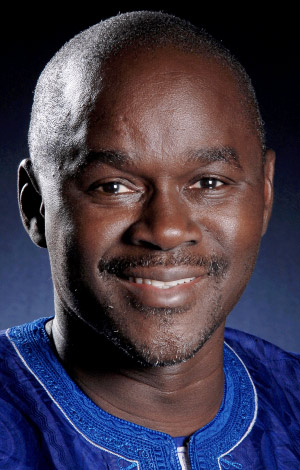 Like everyone else, former ICANN board members have been preoccupied by the horrific November 13th, 2015 attacks on Paris, France, by a bunch of cold-blooded mass murderers. Our email list discussion of the Paris attacks covered a number of issues, including the inevitable question: what, if anything, should ICANN do in response? Some list subscribers concluded that the events had nothing to do with ICANN's mission, and that we should just sigh and move on. Others, on the other hand, said: not so fast, it would serve ICANN well to take a closer look at the matter, and its ramifications on wider world of ICANN. more
Kieren McCarthy reporting in The Register writes: "The US Federal Trade Commission (FTC) has responded to questions over the legality of .sucks domain pricing with a three-page "I told you so" letter to domain name overseer ICANN. more
 Defense Readiness Condition (DEFCON) is a measure of the activation and readiness of the United States armed forces. The DEFCON scale is a numerical ranking from 5 (standard peacetime protocol) to DEFCON 1 (expectation of actual imminent attack). Today ICANN should find itself at a DEFCON 1 status with the announced pending departure of Doug Brent, ICANN's Chief Operating Officer, effect at the end of July. more
 We have just released the 2025 edition of the DOTZON study "Digital City Brands." Since first presenting the study in early 2017, DOTZON has now analyzed for the ninth consecutive year how cities successfully use their Digital City Brands. The Digital City Brand represents the digital aspect of a city's brand and reflects how digitally advanced a city is. The emergence of the Internet was the reason Digital City Brands were created in the first place. more
 The indicators of compromise (IOCs) outlined in my last blog post can be used as a baseline for developing intrusion sets and tracking attack campaigns and threat actors. When launching an attack, threat actors use a variety of vectors and infrastructure, which Verisign iDefense analysts -- as well as analysts across the cybersecurity community -- correlate to group attacks, tracking actors and determining attack methods. more
 In the five previous exciting installments, we've been looking at aspects of the design of the DNS. Today we look at records types, and how you can tell what a DNS record means. All the records in the DNS are strongly typed. Each record includes an RRTYPE, a small number, which defines both the format of the record and what the record means. It is possible and common to have different record types with the same format, but different meanings. more
 CLAT/NAT64 is utilized across many mobile networks globally, and I am only talking about Ethernet and Wi-Fi in home and small office/home office (SOHO) environments. I experimented by completely disabling IPv4 at home and established a SSID where my MacBook Pro operates without an actual IPv4 address. The MacBook supports CLAT (RFC 6877), and by implementing PREF64 (RFC 8781) and DHCP Option 108 (RFC 8925) in my network, I was able to achieve a 100% IPv6 environment. more
 Want to easily show people where a specific submarine cable goes? Or what cables terminate in a particular location? Last year I wrote about Telegeography's cool interactive submarine cable map and how useful it is to understand the submarine cable side of Internet infrastructure. In that article I mentioned how great it would be if you could get a link for a particular cable or location that you could pass along to other people. more
 Yesterday law enforcement officials arrested 6 people and charged them with running a massive internet fraud ring. Over 4 million PCs were part of the botnet. According to the FBI, "the cyber ring used a class of malware called DNSChanger to infect approximately 4 million computers in more than 100 countries. There were about 500,000 infections in the U.S., including computers belonging to individuals, businesses, and government agencies such as NASA." more
 ICANN's CEO and President, Rod Beckstrom, has announced that he will be stepping down in July of next year. The announcement came via Twitter of all places, with a press release, presumably with more details, due sometime soon... With the launch of the new Top-Level Domain (TLD) program scheduled to officially launch early in 2012 maybe Beckstrom feels that his job "is done", or maybe there's another motive behind his departure. more
A World-Renowned Source for Internet Developments. Serving Since 2002.