
Welcome:
Login
|
Sign Up
|
About CircleID
Follow:
|
|
|

 The first salvo on NANOG this morning in response to the launch of OpenDNS was a predictable lambasting along the lines of "here comes SiteFinder II". Fortunately the follow-ups were quick to point out that OpenDNS was a far cry from SiteFinder for the obvious reason that people have the choice to use it, nobody had a choice with SiteFinder. ...the real magic here can come from it's use in phishing mitigation. more
An intersecting representation of the IP Address space on a plane using a fractal mapping that preserves grouping... Section of the map also shows the blocks sold directly to corporations and governments in the 1990's before the RIRs took over allocation. more
Country code domain names are surging in popularity. .de, Germany's domain name, is the second most popular domain behind .com. .UK is more popular than .org. Five country code domains saw double digit growth in the last quarter: at (Austria), .es (Spain), .fr (France), .ru (Russia), and .us (United States). Major companies, including Volvo, are advertising sites based on the .us domain. But what happens to country code domain names that are no longer in use? more
 News reports say that high profile Ryan Pitylak was fined $10 million by the Texas Attorney General. A few days ago, he paid a $1M settlement to Microsoft. Since it had been widely reported that he'd made between $3M and $4M during his spamming career, that seemed like a pretty good deal for him. As I commented to the San Antonio Express, this new fine is more in line with what he did, and at least relieves him of all his ill-gotten gains... more
The CFIT vs. VeriSign et. al. lawsuit had another day in court today. ...The key point coming out of a hearing today (Friday, June 09, 2006) in front of U.S. District Court Judge Ronald Whyte in San Jose, California is that the arguments made by CFIT against the .com deal between ICANN and VeriSign will continue. ...There was one moment of some drama. After lawyers for VeriSign and ICANN both argued that the 7 percent price increases without the need for justification would not be a violation of anti-trust law, Judge Whyte asked the lawyer for ICANN if it would be an anti-trust violation if VeriSign had been granted an annual 100 percent increase. The lawyer said, "no." Other lawyers for other matters sitting in the audience seemed to shift uneasily... more
VeriSign is reporting that over 112M domains have been registered as of the end of Q3 2006. A record number of domain names are now registered, at 112 million, which is 30% higher than just one year ago and 6% higher than the previous quarter. The five largest TLDs remain .com, .de (Germany), .net, .uk (Britain), and .org... more
 India is one of the world's fastest growing economies, the global leader in outsourcing and the service computing, and home to over a billion people. But when I first met officials from the Indian government to discuss their plans for .IN, India had a total of just about 7,000 .IN registrations, fewer than most small countries have. ...(Compare to 100,000 names registered last month alone) This is one of the most rapid starts of any domain worldwide. In my conversations with senior officials of the Indian Government and the National Internet Exchange of India (NIXI) which manages the .IN Registry, they credited three key decisions that proved critical to the success of the domain's re-launch... more
 A U.S.-led Task Force in ICANN's Governmental Advisory Committee (GAC) released version 3 of its "Whois Principles" in preparation for the ICANN meeting in Brazil, where it will be debated and finalized. European countries pushed back against U.S. Government efforts to stop ICANN from respecting privacy concerns in its handling of domain name registrant contact data... more
 Spam on P2P networks used to be mainly with advertising inside downloaded movies and pictures (mainly pornographic in nature), as well as by hiding viruses and other malware in downloaded warez and most any other file type (from zip archives to movie files). Further, P2P networks were in the past used for harvesting by spammers. Today, P2P has become a direct to customer spamvertizing medium. This has been an ongoing change for a while. As we speak, it is moving from a proof of concept trial to a full spread of spam, day in, day out... more
 In January of this year, a frontpage article on WSJ quoted Verizon Chief Executive Ivan Seidenberg "We have to make sure they (Google) don't sit on our network and chew up our capacity". Both AT&T and Bellsouth also made similar statements in the same article. A few days ago, Verizon repeat their call to "End Google's Free Lunch": "A Verizon Communications Inc. executive yesterday accused Google Inc. of freeloading for gaining access to people's homes using a network of lines and cables the phone company spent billions of dollars to build." ...it is no surprise that Network Neutrality, a concept where broadband providers are not to discriminate rivals when they charge tolls or prioritize traffic, is now on the agenda of the US Congress. more
 One topic does not appear to have a compellingly obvious localization solution in the multi-lingual world, and that is the Domain Name System (DNS). The subtle difference here is that the DNS is the glue that binds all users' language symbols together, and performing localized adaptations to suit local language use needs is not enough. What we need is a means to allow all of these language symbols to be used within the same system, or "internationalization". more
 Eurid, the operator of .EU, announced that it was cutting its wholesale price from 10 Euros to 5 Euros (about US$6.40 at today's rate). Is Eurid crazy? They're cutting the price in half! Eurid is acting as if unit cost should go down as sales increase! Haven't they learned the lesson... more
 ICANN is about to make the jump from "merely excavating" to efficiently mining top-quality jewels. I say this because ICANN's At-Large Advisory Committee (ALAC) has reached unanimous consensus on their internal Self Review. As the New Zealand meeting drew to a close, a weary ALAC was ready to give up on creating a consensus Self Review. The familiar ICANN collaborative process of emailing Word attachments had "excavated" ALAC into the also familiar ICANN mire of "deeply divided over competing versions." more
 With the IGF underway, there's a lot of discussion surrounding Internationalized Domain Names (IDN). There has been lots of great progress in IDN technology with IE7 and Firefox browsers now fully IDN-Aware, strong IDN registrations and websites behind them. Now that many of the hurdles to implementation have been addressed to where the technology is either currently available to most internet users, or shall be soon, we now focus to the other aspects of IDN... more
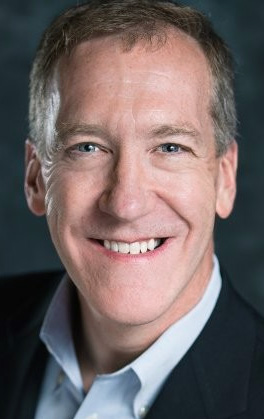 ICANN's new Registry Service Technical Evaluation Service (RSTEP) process is definitely a positive step forward for ICANN. The comment period for the Tralliance proposed new service using the DNS wildcard feature closed Wednesday night. ...Ken Fockler commented "there are no right answers and no wrong answers, just judgments and decisions made on those judgments." In this light, I would be interested in hearing different perspectives on the following questions... more
A World-Renowned Source for Internet Developments. Serving Since 2002.