
Welcome:
Login
|
Sign Up
|
About CircleID
Follow:
|
|
|

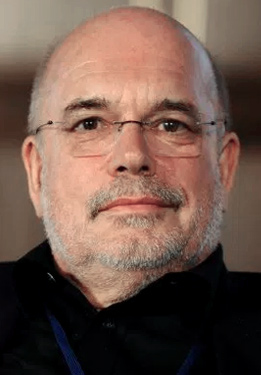 On August 16, 2022, UN Secretary-General Antonio Guterres nominated ten high-level and eminent persons to serve in a new IGF Leadership Panel (ILP). The ILP includes luminaries like Vint Cerf, the father of the Internet, Tomas Hendrik Ilves, the former president of Estonia, and Maria Ressa, the Philippine woman who won the Nobel Peace Prize in 2021. It is an interesting mix of "usual suspects" and "fresh blood." more
 Just as the last change in administration changed the course of the FCC, so will the swing back to a Democratic administration. If you've been reading me for a few years, you know I am a big believer in the regulatory pendulum. Inevitably, when a regulatory agency like the FCC swings too far in any direction, it's inevitable that it will eventually swing back the other way. more
 The ICANN community recently gathered in Kobe, Japan for its first meeting of the year and it was certainly a busy week for attendees. Much of the meeting centered around the work of the Expedited Policy Development Process (EPDP) to address gTLD registration data. As a member of the EPDP team, we had been hard at work since being formed in August of 2018. Just prior to the Kobe meeting, we published the phase 1 Final Report. more
 Earlier this year, the Obama Administration announced its plans to turn over the very heart of the Internet to the control of ICANN. On Monday, Republican leaders of the House and Senate Judiciary Committees sent a letter asking the Government Accountability Office to study whether a Congressional vote on the transfer is required under the Constitution's Property Clause because administration of the root zone file is a government asset, created under government contract. Some will no doubt dismiss the letter as Republican obstructionism. more
 It probably is because we are so good at doing that in our industry. We start with over-promising and under-delivering and then in following years we fix it. So why would 5G be different? Our admirable technology companies are telling us that 5G will be 100x faster than 4G and that it will have 50x lower latency. But my more independent technology colleagues tell me 'it all depends'. more
 The European Union (EU) has set a high bar by tackling domain name system (DNS) abuse head on via government regulation and seems to have successfully resisted attempts to water down DNS stewardship obligations. Recent guidance from a key European Commission cooperation group (the NIS Cooperation Group) handling sections of the Network and Information Security Directive (NIS2) intends for a robust implementation of Article 28, which will go a long way toward helping to mitigate some of the longstanding problems that persist in the DNS. more
 Verisign recently published a technical report on new generic top-level domain (gTLD) security and stability considerations. The initial objective of the report was to assess for Verisign's senior management our own operational preparedness for new gTLDs, as both a Registry Service Provider for approximately 200 strings, as well as a direct applicant for 14 new gTLDs... However, in cataloging internal and external risks related to the new gTLD program, we found several far-reaching and long-standing issues that need to be further explored and/or resolved with varying levels of urgency. more
 Why is so much fear being created in the name of protecting trademark owners? Say, if ICANN allowed some third party a generic Top-Level Domain (gTLD) called .panasonic will the sky fall? No, not at all, as Panasonic, the true and rightful TM holder will hit the unauthorized gTLD with a 2x4 and no judge would oppose issuing a cease-and-desist order. Now the other question is... more
 Some readers may wonder why I chose to raise the issue of "trust" now or even ask what it will take for ICANN to repair it. After all, the New gTLDs have been launched; applications have started being received, and all ICANN official announcements are that all is good and going according to plan. But many other readers and astute observers of this space, domestic and international, would not confuse the public dead silence we are hearing from ICANN and its insider community or the euphoria of the long awaited application submissions we are seeing to mean that all is perfect. more
 The Uniform Domain Name Dispute Resolution Policy now has seventeen years of history. A high percentage of disputes are indefensible and generally undefended. As the history lengthens, early registrants of dictionary word-, common phrase-, and arbitrary letter-domain names have been increasing challenged in two circumstances, namely by businesses who claim to have used the unregistered terms before respondents registered them and later by emerging businesses with no history prior to the registrations of the domain names. more
A group of researchers from Belgian University of Leuven and US-based Stony Brook University have conducted a one of a kind content-based typosquatting experiment that studies the typosquatting phenomenon "longitudinally", i.e., in time. more
 Internet public policy -- and the technical ecosystem -- is at a crossroads and the choice of CEO that ICANN's board makes now is probably the most important such choice it has ever made. Since I work in Internet policy across the Geneva institutions where more than 50% of all international Internet-related policy meetings take place, and have worked at ICANN in senior positions in the past, I thought I would suggest some qualities the next CEO should have. more
 In the last RIPE Labs article on this subject How Does the Internet Industry Compare?, we looked at ways to compare our industry with other industrial sectors, and identified a number of characteristics that an industry must have in order to be comparable to the Internet industry. It seems the financial sector or monetary credit industry shares many of these characteristics and in fact behaves much like the Internet industry. more
Russia's Ministry of Digital Development is set to invest nearly 60 billion rubles ($660 million) over the next five years to enhance its internet censorship system, according to a government proposal revealed by Reuters. more
 This Sunday, March 22, 2015, the second Registration Operations Workshop (ROW) will be taking place at the Fairmont Dallas hotel from 12:30 -- 4:30 pm CDT. Discussion will include extensions to EPP, new encryption initiatives and also suggestions for ways to further automate DNS interactions between registries, registrars and DNS operators, including a need to do this for DNSSEC. more
A World-Renowned Source for Internet Developments. Serving Since 2002.