
Welcome:
Login
|
Sign Up
|
About CircleID
Follow:
|
|
|

 On January 27th the Executive Multistakeholder Committee (EMC) held its first meeting to plan the "Global Multistakeholder Meeting on the Future of the Internet Governance" scheduled to be held in Sao Paulo on April 23rd-24th. A review of that planning session's results indicates a Sao Paulo meeting with downsized attendance and, most likely, accompanying expectations. more
 Applying for a new generic Top-Level Domain (gTLD) will be expensive and complex. ICANN's Applicant Guidebook comprises 350 pages of dense instructions, spelling out the procedures to apply for a gTLD and to comment or object to the gTLDs applied for by others. Hidden among the forest of criteria and procedures is a problem that, unless solved, could deny good faith applicants the fair notice they deserve. more
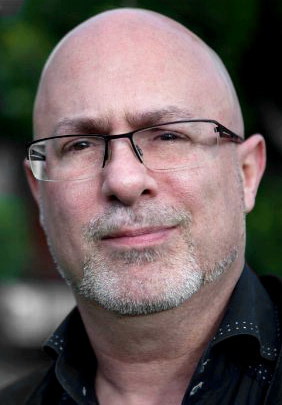 As you may know, there are two laws currently being discussed in Canadian legislative assemblies: Senate Bill S-220, a private member’s bill with private right of action and criminal remedies; Parliamentary Bill C-27, tabled by the government, with private right of action, coordination between various enforcement agencies... more
 Developments in LTE are also going to have a significant impact on the unlicensed spectrum, which is currently used by billions of people through their WiFi modems and WiFi services in cities, cafes, airports and other venues. Known as LTE Unlicensed (LTE-U) or Licensed-Assisted Access (LAA), this technology can also ride on top of WiFi networks (without utilising the mobile service), providing high-speed broadband access to users. more
An underwater data cable linking Sweden and Latvia was damaged early Sunday, marking the fourth such incident in the Baltic Sea, fueling concerns within NATO regarding the security of critical infrastructure. more
 Over at the site V3.co.uk, they have an article up today alleging that since the Rustock takedown two weeks ago, the bagle botnet has moved to take over as the botnet that is responsible for sending the most spam. They have not replaced Rustock's total spam volume, only that they are now the number one spam sending botnet. more
 I was pretty much suprised not to see any application for .SCOUT in round 1 of the ICANN new gTLD program. There were two applications for .GUIDE but a guide is a guide and a scout...is a scout. I remember going to meetings and introducing the potential of .SCOUT. Basically, what is say on my personal website: "I look forward to organize a team around one major Community project for round 2. more
 One of the hot topics at this year's Internet Governance Forum was the continuing development of the infrastructure of the Internet in emerging markets. For example, in a workshop entitled "Strengthening ccTLDs in Africa", attendees debated the drive for technical excellence, better policy structures and enhanced quality of service for the continent's ccTLDs. ... To support this development, we provide a secondary DNS service to not-yet-established ccTLDs, free of charge. more
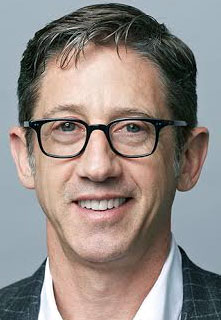 In the short ten years that they've been around, mobile apps have grown to become a staple of modern digital life. With more than five million apps currently available for download in the major app stores, and with over 2,000 new apps being uploaded every day, mobile apps are big business. Fifty-eight percent of shoppers consistently browse e-commerce apps and 49% of all website traffic now comes directly from mobile app users. All this browsing directly translates into spending. more
 Few parts of the Domain Name System are filled with such levels of mythology as its root server system. Here I'd like to try and explain what it is all about and ask the question whether the system we have is still adequate, or if it's time to think about some further changes. The namespace of the DNS is a hierarchically structured label space. Each label can have an arbitrary number of immediately descendant labels, and only one immediate parent label. more
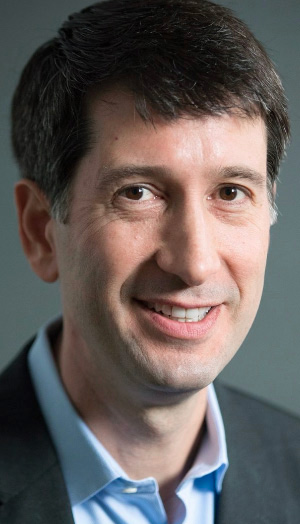 As I predicted more than three months ago, 2016 turned out to be a record year for domain name disputes, including under the Uniform Domain Name Dispute Resolution Policy (UDRP). That's according to statistics from the World Intellectual Property Organization (WIPO), the only UDRP service provider that publishes real-time data on domain name disputes. WIPO's statistics show 3,022 cases in 2016 -- an increase of almost 10 percent from 2015. The previous most-active year for domain name disputes was 2012... more
Harm caused by domain name typosquatting is still modest, to both the user and the brand holder, and investment on anti-typosquatting products should be cautious, according to a paper published in Security and Privacy (SP), 2015 IEEE Symposium titled, "Every Second Counts: Quantifying the Negative Externalities of Cybercrime via Typosquatting." The paper presents a strategy for quantifying the harm caused by the cybercrime of typo squatting via an intent inference technique. more
As industries from agriculture to banking increasingly depend on space-based capabilities, safeguarding satellites from cyber threats has become paramount. In a groundbreaking move to address this, the U.S. military will stage Hack-A-Sat 4, a competition at the famed DEFCON hacker convention, inviting white-hat hacker teams to attempt to infiltrate and control computer systems on a satellite in orbit. more
 Phishing blindsides businesses' best defenses and takes a toll whose price tag still hasn't been pinned down. Here's one estimate: $441 million per attack, according to a recent study of the cybercrime's effect on stock market data (market value, volume of shares traded, and stock volatility) of global firms. The authors use "event studies" techniques (i.e., analyzing the impact of specific types of events on companies' market performance) to analyze nearly 2,000 phishing alerts by 259 companies in 32 countries... more
 The weighing of evidence involves the connecting of dots, which involves drawing inferences. However, just as there can be false positives, there can be false inferences. The tendency may be to think of inferences as coming in one size, but not all inferences are logically correct. Some are weak and others strong. The reason for talking about both kinds is that so much depends on the quality of their making. more
A World-Renowned Source for Internet Developments. Serving Since 2002.