
Welcome:
Login
|
Sign Up
|
About CircleID
Follow:
|
|
|

 One of the most interesting outcomes of the COVID-19 crisis has been a huge resurgence of telephone calls. While broadband usage is up 40% or more in some markets, the volumes of traditional voice calls have skyrocketed. Verizon says it's now seeing an average of 800 million calls per day, which is double the number of calls made on the last Mother's Day. Verizon also says the average length of calls has increased by one-third over recent averages. more
 In separate lawsuits, plaintiffs alleged Facebook and Zynga violated the Stored Communications Act (in Zynga's case, also the Wiretap Act). The crux of plaintiffs' allegations was that when a Facebook user clicked on an ad or a link, the HTTP request sent by the browser included the user's Facebook ID and the address of the webpage the user was viewing when he or she clicked the link. An end user's request to play Farmville would result in the transmission of similar information to third parties. more
Google today revealed a new initiative, named Project Zero, with the objective to "significantly reduce the number of people harmed by targeted attacks." To carry out the project, Google is recruiting a team of experienced hackers - "practically-minded security researchers" - to contribute 100% of their time toward improving security across the Internet. more
In a memo sent to employees on Monday, Ren Zhengfei, the 74-year-old Huawei founder, has asked its employees to work aggressively towards sales targets and warned that the company is facing a "live-or-die moment." more
 It is supremely ironic. A rogue national leader with the stroke of a pen, dictates that its companies will expose a foreign company's end users to cyberattacks. This is the net effect of denying security patches or operating system updates pursuant to Trump's order. In the US Great Rogue Leader's bizarro world, this is the very behavior that he claims makes his actions necessary. In fact, this Trump malware attack is worse because of the mass exposure to exploits. more
 I don't usually write sequels to my articles, but this time, it's warranted. My last column, "VoIP in 2008 -- I'm Not Dead," served as a year-end review and, for me, there were a lot of interesting things in 2008 related to VoIP that formed the basis of that article. I did not intend to rattle cages, but it did, and set off a lot of subsequent conversation, primarily in the blogosphere. more
 I was reading about the Nieman Marcus lawsuit and on a phone call related to the "Working Group on Mechanisms to Protect Rights of Others", when suddenly it occurred to me that this whole rush to rid the world of typos could eventually head in a messy direction... How far can this go? Let me take you back to that phone call I was on where representatives of Yahoo indicated they would try to secure Flicker.XXX as a TYPO of Flickr.com (their made up brand name) during a potential new TLD sunrise period. How backward is that? A Typo that became a brand, trying to call the generic name a variant of their trademark! more
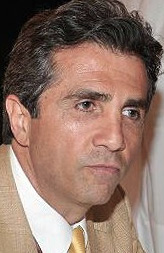 Many who attended the ICANN Durban meeting this summer will recall the open forum were speakers lined up to call on ICANN to either speed up or slow down the new gTLDs depending on their position or interest. I chose to address a different topic that no one was yet willing to tackle publicly. It was PRISM and the NSA surveillance scandals. In my intervention I was also the first to also publicly warn ICANN and Fadi Chehade directly that "Trust" in ICANN and Multistakeholderism face serious perils from the Snowden revelations... more
 I don't know much about Copenhagen, except that Princess Mary of Denmark is really 'our' Princess Mary from Tasmania, Australia. The other thing I know is that it will be really cold. In terms of the ICANN meeting, there continues to be an element of dismay over the scheduling for this meeting, most notably reflected in a letter to ICANN's CEO from the GNSO Commercial Stakeholder Group. While it's good to get these issues on the table ... community should take ownership... more
ICANN, the organization overseeing the Domain Name System, has announced a $10 million grant initiative to propel projects supporting "the growth of a single, open and globally interoperable Internet." The first application cycle for grants is set to open in March 2024. more
 The best and most knowledgeable experts of dot Brand met in the Brands and Domains conference, on October 2 and 3 in the Hague, Netherlands. Brand and project owners were also present, coming from all around the world -- from Australia or Japan to the USA and Canada. The keynote by Georges-Edouard Dias, CEO of Quantstreams and founder of the concept of brand hospitality, explained how customers are not anymore the targets of brands. more
 Lord Carter's Digital Britain report contains few surprises given that its essential thrust has been much discussed during the past six months. What remains unequivocal is that the report and its (political) backers trumpet a national broadband network which promises to deliver an insufficient network. It also lacks a broader vision... more
 As an unwavering stalwart of ICANN's obligation to honor its commitments under the bylaws to "operate to the maximum extent feasible in an open and transparent manner" I make it a point to read the minutes of its board and committee meetings in large part because I spent most of my three years on the ICANN Board trying to get these documents timely published. In reviewing the recently published IANA Committee minutes the following item caught my attention. more
According to Shanghai Daily, there has been an "organized Internet attack on Tuesday night which caused serious congestion in several provinces [in China] and left millions of users unable to gain access to the Internet." This is the first time the regulator has published news about an investigation into an online attack in China within 24 hours, says Shanghai Daily. ..."It was an attack on DNS (Domain Name System) and the carriers and related firms should do more back-up to avoid similar incidents," the ministry said in a statement. more
 There is much hype around 5G, but none of it is new. We saw the same propaganda -- fueled by the manufacturers -- in the run-up to the launch of the 3G and 4G versions of the mobile technology. Driverless cars and a range of other IoT applications can indeed potentially open new revenue streams. The reality, however, is that these markets might not eventuate until somewhere between 2025 and 2030. more
A World-Renowned Source for Internet Developments. Serving Since 2002.