
Welcome:
Login
|
Sign Up
|
About CircleID
Follow:
|
|
|

 It, perhaps, does not have to be said that cybersquatting is an intentional tort. No one would expect the respondent to admit unlawful intention, but complainant's proof must nevertheless support that contention. The Panel in Hästens Sängar AB v. Jeff Bader / Organic Mattresses, Inc. FA2005001895951 (Forum July 31, 2020) reminds us that it takes more than bad faith use of a domain name to find cybersquatting. more
 What is the current state of DNSSEC deployment around the world and also in Africa? How can you deploy DNSSEC at a massive scale? What is the state of using elliptic curve crypto algorithms in DNSSEC? What more can be done to accelerate DNSSEC deployment? Discussion of all those questions and much more can be found in the DNSSEC Workshop streaming live out of the ICANN 55 meeting in Marrakech, Morocco, on Wednesday, March 9, from 9:00 to 15:15 WET. more
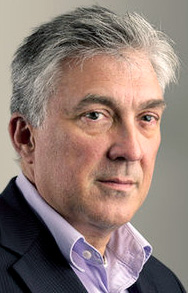 eco, the German ISP association, mentions on its website today that the 100,000th PC was cleaned from infection through its PC cleaning program. Since 15 September, German account holders could visit the website to download tools to clean up computers from digital infections. Botfrei ("botfree", translation WdN) is a cooperation between eco and the German government. First figures seem to prove that this is a successful public-private partnership, worth looking into for other countries as a best practice. more
Are you doing something interesting with DNS, DNSSEC, or routing security that you would like to share with the larger DNS community at the ICANN 76 meeting in March 2023? If so, please send a brief (1 -- 3 sentence) description of your proposed presentation to [email protected] by the close of business on Friday, 20 January 2023. Are you doing something interesting with DNS, DNSSEC, or routing security that you would like to share with the larger DNS community at the ICANN 76 meeting in March 2023? more
 Compared to Miami, Havana is an Internet desert, but Havana may have 5G wireless connectivity before Miami. 5G architecture, US politics and policy, and the 5G timetable favor Havana. Let's start with 5G architecture. 5G will require many "small cells" because it uses high-frequency radio signals that don't travel as far as 4G signals and are more easily blocked by obstructions like trees and buildings. more
SES's first multi-orbit partnership was Cruise mPOWERED + Starlink, providing a managed blend of SES MEO and Starlink LEO service for maritime operators, and we can expect similar bundled services in aviation and enterprise markets. more
 As few as seven years ago, cyber-threat intelligence was the purview of a small handful of practitioners, limited mostly to only the best-resourced organizations - primarily financial institutions that faced large financial losses due to cyber crime - and defense and intelligence agencies involved in computer network operations. Fast forward to today, and just about every business, large and small, is dependent on the Internet in some way for day-to-day operations, making cyber intelligence a critical component of a successful business plan. more
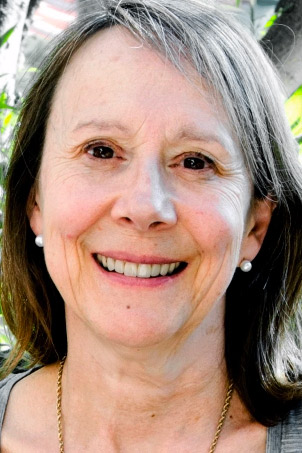 I recently caused a stir in a small but passionate community. I was speaking about a topic I've discussed many times before: the need for more effective public input into the Internet Corporation for Assigned Names and Numbers, the nonprofit corporation that controls the Internet's protocols, addresses and domain name system. "We want public input into ICANN," I had said at a conference at Oxford University. Then, I referred to ICANN's new At-Large Advisory Committee, set up to foster public input and on which I sit: "We've got a mechanism where (the public) can have a seat on the task forces, liaisons to working groups, be part of the policy making process -- I see that in many ways as more important than having a seat on the board." more
Last September, I asked what had happened to the proposal for a branch connecting the ARCOS undersea cable, which has a landing point in North Miami Beach, to Cojimar, Cuba. The consortium that operates the cable had applied for permission to connect Cuba in July 2018, and the FCC granted a request for streamlined processing, which should have taken less than 45 days, but nothing happened until September 2020 when the application was referred to a Justice Department committee... more
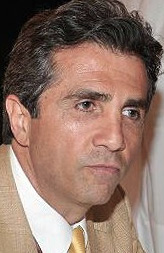 Yesterday ICANN announced that its new CEO Fadi Chehade accepted ICANN Chief Strategy Officer Kurt Pritz's resignation over conflict of Interests -- will a transparent investigation follow? Otherwise, what else and what next? In a statement on its ICANN website, Fadi Chehade states: "Kurt has submitted his resignation because of a recently identified conflict of interest". more
The October Senate Commerce, Science, and Transportation Committee hearing on the commercial satellite industry provides a current example of effective government support of new communication technology. The hearing focused on broadband access, primarily from low-Earth orbit (LEO) satellites. Witnesses from four companies - Intelsat, OneWeb, ViaSat and SpaceX - testified and the tone of the hearing was set by the opening statements of Committee Chairman John Thune and Ranking Member Bill Nelson. more
 In a recent talk at Black Hat, Apple's head of security engineering (Ivan Krsti?) described many security mechanisms in iOS. One in particular stood out: Apple's Cloud Key Vault, the way that Apple protects cryptographic keys stored in iCloud. A number of people have criticized Apple for this design, saying that they have effectively conceded the "Going Dark" encryption debate to the FBI. They didn't, and what they did was done for very valid business reasons -- but they're taking a serious risk... more
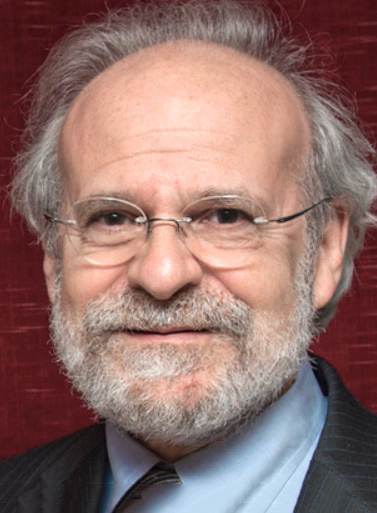 Evolution isn't just about biology. Our focus on biology is part of the world-wide challenge in getting people to understand how systems evolve. Think of the resistance Galileo faced when he said that the universe didn't, literally, revolve round us. One reason people have difficulty accepting undirected evolution is that educators don't give people a good sense of why things "work". It's a difficult problem because we tend to look for a "reason" for why things are the way they are... more
 The U.S. Anticybersquatting Consumer Protection Act ("ACPA") is a federal law -- part of the Lanham Act that deals with trademarks and unfair competition. It says that a person can be liable if he or she registers a domain name that contains another's distinctive trademark with a bad faith intent to profit from that mark. One issue that has arisen over the years is whether registration that can give rise to liability means only the first time the domain name is registered, or whether it applies to the re-registration... more
Are you interested in helping guide the future of the Public Interest Registry (PIR), the non-profit operator of the .ORG, .NGO and .ONG domains? Or do you know of someone who would be a good candidate? If so, the Internet Society is seeking nominations for three positions on the PIR Board of Directors. Read more for details if you are interested in being considered as a candidate or know of someone who should be considered. more
A World-Renowned Source for Internet Developments. Serving Since 2002.