
Welcome:
Login
|
Sign Up
|
About CircleID
Follow:
|
|
|

 When major events like the Super Bowl are on the horizon, cybercriminals exploit public trust by creating fraudulent domains for fake betting sites, phishing, and malware distribution. CSC's research into top online sportsbooks highlights the hidden risks of dormant domains, which, though inactive, can quickly be repurposed for cyber attacks. Overlooked yet dangerous, these domains play a key role in impersonation, misinformation, and scams targeting event-driven traffic, underscoring the need for continuous monitoring of lookalike, dropped, re-registered, and newly registered domains. more
 After a prolonged slump, IPv4 prices are rising as tightening supply meets sustained demand from cloud and AI infrastructure, signalling a market correction and diminishing opportunities for buyers who had delayed acquisitions. more
 Low Earth orbit is crowding as Starlink, Amazon, China and others race to deploy thousands of satellites, promising faster broadband while intensifying global competition, orbital congestion concerns and a push for direct-to-device connectivity. more
 AI-powered "vibe-coding" is transforming domain registration from manual search into automated, conversational infrastructure, embedding domains directly into software workflows while elevating them into machine-verified trust anchors in an increasingly AI-mediated internet. more
ARTICLE 19 warns that governments are increasingly exploiting internet infrastructure to silence critics, using domain suspensions to block entire websites while regulators and registry operators debate how to balance online safety, technical abuse prevention and freedom of expression. more
 Starlink's rapid integrated model contrasts with China's coordinated, multi-constellation strategy, where specialised networks share roles. Though slower to deploy, this system could narrow the gap and reshape global satellite internet competition by 2030 significantly ahead. more
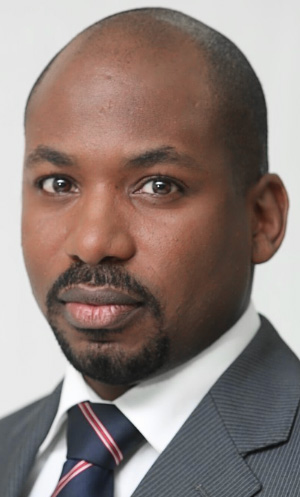 CaribNOG's 32nd forum in Curaçao marks a shift from volunteer roots to institutional structure, as the Caribbean network community formalises programmes, expands research, and positions itself to tackle climate, geopolitical, and infrastructure pressures. more
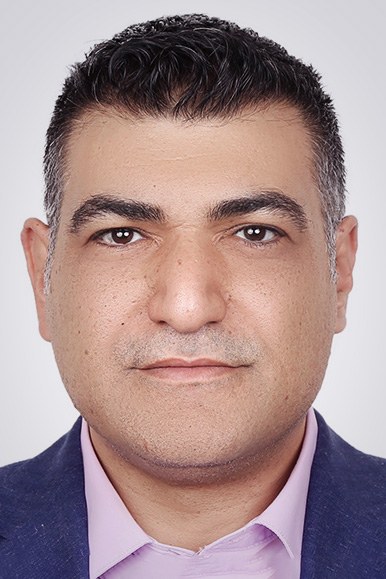 Africa's internet governance faces parallel tracks as AFRINIC's community-led reforms unfold alongside a continent-wide blueprint, raising questions over whether legitimacy will stem from participatory processes or increasingly coordinated external alignment. more
 As ICANN opens its 2026 round, firms sharing trademarks must weigh applying for a .BRAND domain against legal risks and competitive loss, with evidence suggesting first movers gain advantage while objections rarely prevail. more
AWS has quietly acquired nine million more IPv4 addresses, turning internet scarcity into strategic leverage. As hyperscalers consolidate dwindling supply worldwide, IPv4 is evolving from legacy protocol into a profitable infrastructure moat for cloud giants. more
April's satellite sector saw Amazon's $10.8bn Globalstar bid, surging plans for orbital data centres, intensifying SpaceX rivalry, regulatory friction, and doubts over broadband promises, underscoring a crowded, contested race to control next-generation connectivity infrastructure global. more
 Threat intelligence is shifting from a passive feed to a core operational layer, helping infrastructure defenders connect fragmented signals, identify recurring attack patterns, and prioritise responses in an increasingly modular and fast-moving cybercrime ecosystem. more
 Africa's digital boom is accelerating, but safeguards lag. Governments and firms deploy systems at speed, while weak enforcement and fragmented oversight leave economies exposed to mounting cyber risks. more
 Do you (or someone you know) believe that people everywhere should have access to affordable, reliable, and resilient Internet connectivity? Are you passionate about ensuring that people everywhere have an Internet experience that is safe, secure, and protects them online? Do you have leadership experience in business, government, philanthropy, and/or the nonprofit sector? more
 Last month marked 40 years since the registration of the world's first ever .com domain name – symbolics.com – in March 1985. It’s a time to reflect both on the role .com has played in the evolution and growth of the internet over the past 40 years, and on the importance of ensuring that .com remains secure, stable, and resilient for the billions of people who rely on it every day. Who could have imagined in 1985 that over the course of the next four decades, internet users would register hundreds of millions of domain names... more
A World-Renowned Source for Internet Developments. Serving Since 2002.